Momentus Achieves First Orbit Raise with Pioneering Propulsion System

New sustainable spacecraft engine uses distilled water as propellant.

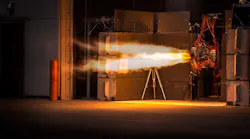
Momentus Inc., a U.S. commercial space company that offers orbital transportation and in-space infrastructure services, successfully achieved the first orbital raise of its Vigoride-5 spacecraft using its pioneering Microwave Electrothermal Thruster (MET) that uses distilled water as propellant.

The successful maneuvers raised the altitude of the Vigoride Orbital Service Vehicle (OSV) by more than 3 kilometers, taking into account the atmospheric drag that the spacecraft must overcome each day. Orbital altitude raises are an integral part of Momentus’ transportation service offering that aims to deliver customer satellites to precise and custom orbits.

“This initial orbital raise was a key goal of our Vigoride-5 mission and the MET’s performance has exceeded our expectations,” said Momentus Chief Technology Officer Rob Schwarz. “Each ignition has been successful, and we’ve completed more than 35 firings ranging from 30 seconds up to six minutes in duration, which is what we plan to use operationally. Cumulatively, we have accomplished over 140 minutes of firing time of the MET system.”

“We have now operated the MET successfully in space at full power across the range of durations for firing that we plan to use operationally to deliver satellites to precise, custom orbits and to provide in-space infrastructure services like hosted payloads,” said Schwarz. “The MET has shown its ability to operate as intended to perform these missions in space, and we look forward to using it to support commercial and U.S. Government customers.”

The MET is the Vigoride OSV’s primary propulsion method that relies on solar power and uses distilled water as a propellant. It produces thrust by expelling extremely hot gases through a rocket nozzle. Unlike a conventional chemical rocket engine, which heats propellant through a chemical reaction, the MET uses a solar powered, microwave energy source to generate a hot plasma at its core that heats the propellant to generate thrust. The use of non-toxic water propellant ultimately enables simpler, safer, and more cost-efficient operations both on Earth and in space.

“The MET technology can provide future missions with higher efficiency than chemical propulsion systems and higher thrust than electric propulsion systems. With the recent discoveries of large deposits of water on the Moon and its presence on asteroids and other planets, a water-based propulsion system that can be refueled on longer missions provides a unique advantage,” said Momentus Chief Commercial Officer Chris Kinman. “With its technology working in space, Momentus is emerging as a trusted provider of in-space infrastructure services. Our proven flight heritage and MET performance, paired with our focus on affordability, flexibility, and speed, positions Momentus to be a key partner for customers looking to make the most out of their orbit.”

Momentus has flown three of its Vigoride OSVs in less than a year. The Company launched its inaugural mission, Vigoride-3, in May 2022 and deployed eight satellites to orbit from Vigoride and a third-party deployer. The Vigoride-5 spacecraft, launched in January, is providing hosted payload support for Caltech's Space-based Solar Power Project payload and deploying a satellite with the Qosmosys Zeus-1 payload. Vigoride-6, launched in April 2023, is carrying satellites for NASA and commercial customers, and a solar array developed by Momentus that will be demonstrated in space.
Sign up for our eNewsletters
Get the latest news and updates

Related

Ursa Major
This important company milestone comes amid concerns that the United States has fallen behind Russia and China's hypersonics capabilities. Additionally, much of the rocket propulsion in the U.S. has previously come from Russia or Ukraine and Russia recently announced that it would no longer sell its engines to the U.S. 'Delivering Hadley engines to customers who will use them for very different purposes shows the Ursa Major business model in action—higher performing engines, more of them, delivered quickly at less than half the cost,' said Joe Laurienti, founder and CEO of Ursa Major. 'By freeing launch companies from the expense and difficulty of building their own engines or buying sub-par technology from other countries, Ursa Major will accelerate the number and frequency of successful launches across sectors.' Phantom Space, a space technology and transportation company, will use Hadley to power its two-stage expendable rocket, which transports satellites and other space cargo into Earth orbit and beyond. Stratolaunch, an aerospace vehicles and technology company, will use Hadley to power its reusable hypersonic testbed vehicle, which is designed to reach Mach 6, or six times the speed of sound. By making flexible rocket engines that can be used for multiple purposes, Ursa Major helps customers get to launch three times faster at a low price and without the development cost of building engines in-house. By supporting other aerospace startups, Ursa Major is helping shape the modern space economy with entrepreneurial thinking and innovation. 'Hadley's greatest strength is that she simply exists,' said Silas Meriam, senior test operations engineer, Ursa Major. 'No one else is making engines with 5,000 pounds of thrust at this level of reliability—and they're available now.' Because Hadley is mostly 3D-printed, Ursa Major can make data-driven design improvements and manufacture them essentially in real-time. Hadley highlights: Can be used in first stage, upper stage, and hypersonic applications More than 30,000 seconds of run-time at Ursa Major's own facilities Sufficient engine life to support pre-flight ground testing or static-fire testing, as well as flight, without additional modifications or inspections Wide range of customizable throttle levels and thrust profiles to meet customer needs Seven-degree thrust vectoring provides more control and maneuverability for typical flights, and may also enable vertical landing and return-to-launch-site burns, among other capabilities The commercial availability of Ursa Major engines allows customers to develop flying hypersonic testbeds, which minimizes the need for large, expensive, and notoriously scarce wind tunnels. Without the testing bottleneck created by wind tunnels, hypersonics companies can conduct more tests and generate more data, which significantly accelerates the development process and fuels innovation. Further, this test data is more representative of the actual flight environment and less expensive than ground-based wind tunnel testing. The cumulative result is higher performing, more reliable hypersonics technology, produced quickly and efficiently at a lower cost. 'Ursa Major and its peers are driving significant advancements in many sectors across the new space economy,' continued Laurienti. 'Our propulsion systems and proprietary testing platform are already empowering Ursa Major commercial customers to reach their goals. We stand ready to support our government's efforts to reestablish U.S. global leadership in space technology as well.' On February 4, U.S. Secretary of Defense Lloyd J. Austin III held a meeting with top Pentagon leaders and several large defense company CEOs about the country's lagging hypersonics technology. The meeting focused on lack of sufficient testing infrastructure in the U.S., specifically wind tunnels.