Inside the New Engine Market Reality for MROs
Key Highlights
- Global backlog exceeded 17,000 units, with over 5,000 aircraft parked awaiting engines, leading to delayed fleet modernization and rising operating costs.
- Engine maintenance spending surged, reaching $62.4 billion, driven by aging fleets, delayed deliveries, and the need for intensive engine overhauls.
- Industry forecasts predicted continued growth in engine MRO demand, peaking in 2026, with Asia Pacific leading expansion due to rapid fleet growth and rising air traffic.
Commercial aviation sector operators entered the year of 2025 expecting gradual recovery and increasing fleet renewal.
Instead, they faced challenges that made engine availability, shop access and supporting infrastructure central to fleet planning. These included:
- Backlogs
- Early engine removals
- Limited maintenance capacity
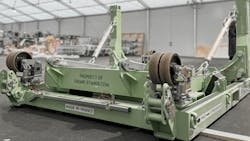
Data from EngineStands.com reveals how these pressures impacted operations and elevated the role of ground support equipment.
Why delivery increases weren’t enough
2025 appeared to mark progress for engine manufacturers.
- CFM International continued to dominate narrowbody deliveries with the LEAP family supporting both the Airbus A320neo and Boeing 737 MAX programs.
- Safran reported 1240 LEAP engines delivered in the first nine months of the year representing a 21% increase year on year and pointing toward full year deliveries approaching 1650 units.
- Pratt and Whitney confirmed it had supplied enough PW1100G and PW1500G engines to meet Airbus’ revised 2025 delivery targets even pulling some 2026 production forward.
Yet these gains did little to ease the industry’s structural imbalance.
With a global aircraft backlog exceeding 17,000 units and more than 5,000 aircraft parked awaiting engines, airlines continue to face issues like:
- Capacity constraints
- Rising operating costs
- Delayed fleet modernization
This supply-demand imbalance expected to persist into the 2031–2034 period.
What engine stand utilization reveals about MRO reality
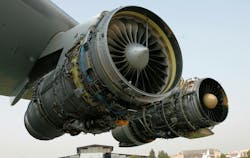
EngineStands.com data offers a clear view of what is happening on the shop floor, highlighting the growing bottlenecks in availability and the increasing complexity of maintenance planning.
In 2025, utilization of stands for new-generation narrowbody engines more than doubled compared with 2023, with LEAP-1A usage up by 179%. This surge reflects the operational pressures of the new-generation engine crisis, which saw nearly 6,000 shop visits across engines like:
- PW1100G
- PW1500G
- LEAP-1A/1B
By late 2025, over 800 GTF engines were out of service globally due to contamination in turbine components, grounding nearly 38% of the A320neo fleet.
To mitigate these disruptions, airlines extended the operational life of older aircraft, returning legacy engines such as CFM56 and V2500 to MRO shops for more intensive age-related maintenance.
This drove MRO demand upward by approximately $23 billion, while also increasing the strain on ground support infrastructure. EngineStands.com data shows that stand utilization for legacy engines rose by one third in 2025 compared with 2024, with CFM56-5A/B stands usage up 60% year-on-year.
Rental durations patterns at EngineStands.com mirrored these trends.
Narrowbody legacy engine stands, including CFM56-7B and CFM56-5A/B, saw leasing periods grow 48% and 21% percent, respectively, while V2500 project timelines increased 53%.
Among new-generation engines:
- LEAP-1B leasing periods grew 133%
- LEAP-1A shortened 2%
- PW1100 and PW1500 declined by 16% and 2%
Widebody engines saw even more extreme fluctuations, with PW4000-94 rental periods surging 262% and Trent700 leases shortening 17%.
Head of EngineStands.com Hanna Lavinskaja elaborated, “Our 2025 figures clearly reflect the pressures our customers faced last year across the engine maintenance ecosystem, including longer shop visit turnaround times, tighter MRO capacity, and more intensive maintenance events.”
Lavinskaja continued, “These trends point to slower stand circulation and tighter availability, highlighting the importance of securing equipment in advance and aligning stand planning closely with maintenance schedules to minimize operational disruption.”
Industry-wide, engine overhaul turnaround times rose 35% for legacy engines and over 150% for new-generation engines compared with five years ago, with maintenance slot waits extending by two to six months.
Total engine maintenance spending reached $62.4 billion, including:
- $29.6 billion for narrowbody
- $27.4 billion for widebody
- $5.4 billion for regional engines
Delayed deliveries and aging fleets added $11 billion in costs, according to IATA.
Which operational pressures impacted aviation the most?
EngineStands.com data also reveals how airlines, lessors, and traders experienced distinct operational pressures:
|
Client Type |
Most Utilized EngineStands.com Models |
Usage Purpose / Observed Trends |
|
Airlines |
CFM56-7B, CFM56-5A/B, V2500, LEAP-1A, LEAP-1B, PW1100G, PW1500G |
Supporting aging fleets with longer operational cycles; balancing durability challenges of new-generation engines. |
|
Lessors |
LEAP-1A, PW1100G, V2500, Trent 700, PW4000-94 |
Managing maintenance exposure; preserving engine asset value; navigating a constrained market. |
|
MROs |
PW1100G, PW1500G, LEAP-1A/1B, CFM56-5A/B, PW4000-94, Trent 700 |
Scheduled maintenance, overhauls, life-limited part replacements; handling longer operating legacy fleets and durability issues of new-gen engines. |
|
Traders |
CFM56-7B, PW1100G, PW4000-94, V2500, Trent 700 |
Engine transitions, teardowns, short-term storage; episodic demand peaks during market stress. |
The surge in MRO demand highlighted the critical role of:
- Spare engine availability
- Effective inventory management
- Long-term service agreements with OEMs, MRO providers and ground support equipment specialists
EngineStands.com data showcases that infrastructure, planning, and equipment readiness are central to maintaining fleet reliability in a high-demand environment.
Why demand continues to outpace capacity
Industry forecasts indicate the pressures seen in 2025 are not temporary.
By 2035, the global fleet is expected to approach 90,000 active engines. Engine MRO demand is projected to peak in 2026 and exceed available capacity by more than 17% before the end of the decade.
Between 2025 and 2034, total engine maintenance demand is estimated at $690 billion driven primarily by narrowbody fleets.
Asia Pacific will lead global MRO growth reflecting rapid fleet expansion and rising air traffic, while North America and Europe will continue generating demand through mature high utilization fleets.
More than 95,400 engine shop visits and nearly 49,300 life limited part replacement events are forecasted globally over the next decade placing sustained pressure on maintenance infrastructure workforce availability and supporting equipment.
How has EngineStands.com responded?
To respond to increasing demand for engine MRO, EngineStands.com provides access to OEM-certified engine stand leasing solutions that keep maintenance operations on schedule.
Operators rely on partners who understand aspects of maintenance like:
- Operational urgency
- Engine-specific requirements
- Logistical constraints
- Proactive response to issues
Aircraft on Ground Duty Manager at Gulf Air, Suresh Kumar Korkana shared,
“The quality of their equipment is good & in excellent condition, which helped our workflow efficiency simultaneously maintaining the high safety standards.”
Korkana added, “Their team is responsive, knowledgeable, and always ready to provide support when needed.”
What can MROs learn from trends in 2025?
The defining lesson of 2025 is clear—engine availability is no longer shaped solely by production rates or shop capacity.
Engine stand utilization has been driven to record levels, largely by:
- Extended maintenance cycles
- Higher shop-visit volumes
- Life-limited-part replacements
This underscores the need for careful planning and reliable infrastructure to keep fleets on schedule and maintenance workflows efficient.
Organizations that partner with reliable providers are better positioned to:
- Optimize maintenance workflows
- Sustain high safety standards
- Ensure fleet readiness
Integrating engine stand planning into long-term MRO strategies has become a critical factor for maintaining operational resilience in today’s increasingly constrained maintenance environment.