Helios Horizon Completes First Ever Piloted Electric Airplane Flight Using Solid-State Batteries
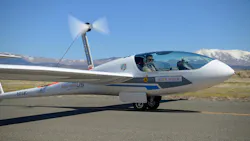
Helios Horizon has successfully completed the first ever human-piloted flight of an electric airplane powered with solid-state batteries.
In this history-making event, the demonstration showcased how using solid-state batteries instead of lithium-ion batteries can double flight times and range for electric aircraft.
While most electric aircraft use lithium-ion cells—also used in electric cars—solid-state batteries offer benefits like:
- Smaller components
- 60-80% greater energy density
- Charging time to 80% less than 15 minutes
These solid-state batteries also remain more stable in the face of punctures or high temperatures, offering a lower risk of combustion than traditional batteries by resisting:
- Damage
- Overheating
- Thermal runaway
This is possible because solid-state batteries use solid materials rather than the liquid electrolyte used in lithium-ion batteries, and it also allows for greater energy storage.
The test flights took place at Zephyrhills Municipal Airport, where Chief Test Pilot Miguel Iturmendi piloted the plane and validated the balance and weight of the Helios Horizon aircraft after modifying it with the solid-state batteries.
As the tests were successful, they showcased how these batteries performed better than teams anticipated, even during multiple hours of operation.
“For the first time, we have a battery technology that yields the range and charging times necessary to make commercial electric aviation viable, while providing the safety the flying public will demand,” Iturmendi said.
The Helios Horizon aircraft holds the world record for highest altitude for electric aircraft in the same class, and it also has design considerations for entering the stratosphere. Using solid-state batteries, Iturmendi noted that the aircraft should be able to fly stratospheric flights on one charge.
The team is currently targeting altitudes over 40,000 feet, but it has currently reached 24,000 feet at a maximum.
While this aircraft’s lithium-ion batteries initially provided 260 watt-hours per kilogram, its new solid-state batteries provide 410 watt-hours per kilogram.
Iturmendi explained that solid-state batteries could grow in energy density by 40% more over the next two years, with their smaller volume and unique characteristics helping to improve:
- Range
- Altitude
- Flight time
Helios Horizon also has simple charging requirements, like:
- Almost any AC electric source
- No special infrastructure
- In-flight recharging via solar panels and propellers
“Regenerative flying, in which we glide and windmill the propeller during descents, can significantly increase the range of the airplane,” Iturmendi said.
The team now plans to continue optimizing Helios Horizon’s systems for stratospheric flights planned for later in 2026.