Delayed: Cape Air’s Fleet Upgrade Plans Stall Amid Financial Strain, Pilot Shortage
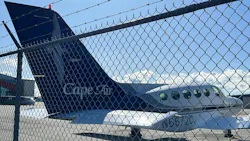
If you’re flying around New England this summer to lounge on the beach, eat seafood, and maybe hit a few museums, the chances are good you may be getting there aboard a museum piece — a twin-engine plane operated by Cape Air.
The bulk of the airline’s fleet is Cessnas manufactured between 1967 and 1985, making even the newest planes just over 40 years old.
Airline analysts say that well-maintained older planes can be safely flown almost indefinitely, and Hyannis-based Cape Air has a solid safety record. But a plan to bring in two new types of aircraft to replace the aging Cessnas seems to have gone off course in recent years.
With nearly 100 aircraft flying 92,000 flights a year in the Northeast, Caribbean and Montana, Cape Air is one of the country’s biggest independent regional carriers. The airline has yet to settle on a clear path forward.
Plan A was announced in 2015, when Cape Air said that it was committing to buy 102 newly designed airplanes from Tecnam, a company based in Capua, Italy. The plane was designed to Cape Air’s specifications, and it would be the first commercial operator to fly the new aircraft.
The first plane arrived in Massachusetts in 2019, with two others following in 2020 just as the COVID-19 pandemic hit. Like the Cessnas, Tecnam’s P2012 Traveller has two piston-powered engines — as opposed to turboprops or jets — and can seat nine passengers. They cost about $2.75 million each.
However, instead of acquiring 100 of the Tecnams and retiring its older planes, Cape Air bought 30 of the new planes — and then halted its purchases at the end of 2021.
Plan B emerged in 2022, when Cape Air committed to being the launch customer for Eviation Aircraft, a startup in Washington state making a battery-powered plane.
Cape Air hoped the nine-seat twin-prop plane would connect Hyannis with Nantucket and Martha’s Vineyard, and Boston with the islands. The company said it would buy 75 of the all-electric aircraft. Eviation said the planes would cost about $4 million each, but have much lower operating and maintenance costs than traditional gas-powered aircraft.
The plane completed its first demonstration flight in 2022, but by last year the company had laid off most of its staff, paused development of the plane and was hunting for additional funding. Its website is no longer online.
Online postings and one former Cape Air pilot suggest that the Tecnam aircraft that Cape Air acquired starting in 2019 have caused some maintenance headaches. Two of the first Tecnam airplanes that Cape Air acquired in 2019 are also up for sale.
“Maintenance-wise, we saw significant engine work almost weekly,” said Juno Kim, a former Cape Air pilot who flew the airline’s routes in Montana. “Cylinder swaps or even full engine changes were pretty common to see in the hangar. I actually had to shut one (engine) down in flight once.”
“I have no idea if any of this is why management pumped the brakes on buying more of them,” Kim said, “but the maintenance demands and reliability issues were definitely noticeable for pilots.”
Tecnam’s managing director, Giovanni Pascale Langer, wrote via email that “it is important to distinguish between individual opinions and the actual operational record.” He said that “like any brand-new aircraft entering commercial service,” the Tecnam “experienced some initial entry-into-service challenges,” which the company worked to address with Cape Air.
“Thanks to this collaborative effort, numerous product improvements have been implemented over the years,” Langer said.
Cape Air’s CEO, Michael Migliore, denied that the Tecnam aircraft have presented more maintenance issues than the older Cessnas that Cape Air flies. He said that on average, a Tecnam in the fleet is flown for about 1,000 hours a year, in part because they fly the airline’s longer routes, compared to about 500 hours on average for the Cessnas. More hours in the air means more hours of maintenance in the hangar.
As for the older Cessna aircraft, Migliore said they are “extremely reliable,” and the Federal Aviation Administration doesn’t put any expiration date on flying older planes.
“We can fly them as long as we want,” Migliore said. “The trade-off is that like a car, as they get older, it takes more to maintain them.”
He said that the Cessnas represent the bulk of Cape Air’s fleet, with 63 airplanes.
So why pause the purchases of the Tecnams at 30? Migliore said the airline is still working to return to its pre-COVID passenger levels, which has created financial strain.
There is also a shortage of pilots to fly Cape Air’s routes, he said. In 2022, the airline began exiting from the Midwest market, where it once had a hub in St. Louis, in one case citing the pilot shortage.
As for the electric plane from Eviation, Migliore said Cape Air’s order was still in place through last year, when the company laid off most of its employees and paused development of the plane. Cape Air had put down a deposit with the company, which was returned.
“It’s going to cost a lot of money to get electric aviation across the finish line,” he said. But with Cape Air’s short routes, like Boston to Provincetown, he said that he felt the airline was “the right operator” for an electric plane — at some point. He said he was following the progress of Vermont-based BETA Technologies and Virginia-based Electra, two other startups developing electric airplanes. Electra is developing a nine-passenger airplane, which for Cape Air is the ideal capacity.
Among traditional gas-powered aircraft that can carry nine people, Migliore said two options are the Cessna Caravan and the Pilatus PC-12; both are single-engine planes.
“As we grow, hopefully we’ll need to buy more airplanes,” he said. “We just want to make sure it’s the right aircraft for the right mission.”
Two summers ago, I was excited to get the chance to ride on one of the new Tecnams, on a 90-minute trip from Boston to Rockland, Maine. The company’s website promised the newer aircraft when I bought a pair of $179, one-way tickets online. But when we got down to the ramp area where the Cape Air planes load and unload passengers, an employee walked us over to one of the vintage Cessnas, without explaining the switch.
Migliore told me that of the 30 Tecnams, just 15 are based in the Northeast, with the rest flying in Montana and the Caribbean. Sometimes a Cessna is available when a Tecnam is not, he said.
Despite having to deal with the fog that frequently blankets the Rockland airport, we got there safely.
©2026 Advance Local Media LLC. Visit masslive.com. Distributed by Tribune Content Agency, LLC.