Australia — All Systems Go!
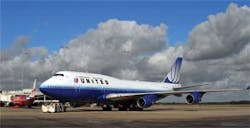
In the aviation context, Australia has always been unique. Firstly it’s a long haul destination from almost anywhere else in the world, and secondly, when you get there it’s a huge continent with long distances to travel. Aviation has always been seen as the answer to both these problems. The history of long distance flight is littered with records and endeavors to and from Australia and within the country itself. Qantas is the classic example, the company’s heritage rooted in providing a domestic outback service before evolving into the model of how to do it for just about every other long haul operator in the world.
None of these geographical facts have changed over the years of commercial aviation. This year Qantas clocks up an impressive 88 years of operation — the second oldest airline in the world. (Quiz: Name the oldest airline!)
Increased Industry Growth
What is changing is the way the industry is structured, the growth in just about every sector of operations, and implementation of long-term planning — like never before.
The driver in Australia is a strong economy led by record exports of minerals, natural gas and all associated business activity this generates. Australia is on a roll and a long-term roll at that — one that has grounded economic confidence to order up new aircraft and plan expansion across the whole transportation sector.
The Airbus order book for the region stands at 96 aircraft. Boeing stands at a whopping 140, made up of 49 B737s and 78 B787s.
Record breaking statistics and a full order book for the aircraft manufacturers also represent an associated increase in activity for ground support suppliers across all parts of the industry. Every new route, new carrier and airport expansion represent a marketing opportunity for businesses selling everything from software to the toughest, rugged hardware.
One big growth area has been driven by the “fly in, fly out” staffing of the mineral, energy and construction sector.
These operations are invariably remote from any established communities and all the supplies, equipment and importantly, people must be flown in and out. This has represented big contracts for some smaller charter operators, providing them with a long-term basis on which to re-equip and build their businesses. All that extra traffic requires ground services, maintenance and flight crew. It has been a challenge to get those facilities in place so quickly, find qualified people and train new staff.
The pressure is on
The imperative of huge production goals drives solutions but the pressure is really on to sustain services.
In the west and north of the country, five large players have emerged: Qantaslink, Skippers, Alliance, Skywest and Air North. Scheduled services to remote outback towns are augmented by regular charters in and out of mine sites — often on a daily basis.
Healthy contracts for government work have been awarded to several medium-sized contractors like Skytraders, who have such diverse work as a weekly A319 charter to the scientific base in Antarctica. Logistics support for the Australian UN peacekeeping operations in Timor, Solomon Islands and Afghanistan has stretched the capacity for the major players and opened up contract work for the handful of operators who have the capacity to handle this extra business. National Jet Systems, based in Adelaide, is a major player. The Royal Australian Air Force is about to take delivery of a fourth C130. These new aircraft will earn their keep on Australian Defence Force missions.
Qantas and their budget brand, Jetstar, dominate the domestic scene, along with Virgin Blue and their international product Pacific Blue.
Tiger Airways arrived late last year with the best prices in town and made a first price-based impression, however, a limited network and fleet will keep the Tiger caged for a while but that will change. As well as providing a domestic service, Tiger feeds into the northern hub of Darwin where they connect to their extensive Asian network and a very strong budget tourism market.
All three domestics have invested enormously in new fleet — without exception, the equipment is straight from the showroom floor. That is important in this market — the passengers will line up and handle cut backs in cabin service but have voted with their bums when presented with less than very new aircraft. The marketing gurus will tell you that’s a Qantas standard that has been well entrenched and now part of the traveler’s mindset.
The media in Australia just love the long delay or the flight from hell story which makes for exceptional passenger service efforts to avoid any hint of a problem, and everyone at the gate know and care about avoiding bad press. In this day and age, when just about every passenger can call a local talkback radio jock, or capture a few minutes on their broadcast-quality camcorder, the justification PR release from the carrier a day later is irrelevant — the news has spread. These days what happens in and around the gate when there is a problem or a delay is probably being recorded on a cell phone camera or a camcorder — probably edited and put out there with a degree of misinformation to the whole world. A sobering reality that has to be noted by everyone in the business. I digress.
A Need for skill
New international services and a lift in domestic travel have all the passenger growth figures up between 5 and 10 percent at the major airports such as Sydney, Melbourne, Brisbane, Darwin and Perth. Sydney is by far the busiest of Australia’s airports and the owners, Macquarie Airports grew traffic by 6.4 percent to touch the 32-million passenger mark. Across the board, expansion of terminal space, additional gates and associated ground works are being planned. Again Sydney is a good example — $A500 million announced for a new international terminal facility.
Keeping all this growth serviced is a challenge. Australia has a highly trained and regarded workforce in the aviation industry. Always in demand by carriers in Asia and Middle East, flight crew and maintenance engineers are employed around the world.
That can leave a hole in the Australian market and new incentives have been put in place to lift the whole skills training scene particularly for technical college graduates.
Qantas has for decades been the leader in training and stamping the company’s standards of excellence on their engineering staff — that grounding has been transferred across to just about every other corner of the industry in Australia.
Just about every company has a few Qantas-trained people leading their engineering.
Rumors of taking some heavy maintenance off-shore have been circulating for a few years, however the reality is that in practice this is not attractive as most Australian airlines need to impose their own high standards and the PR fallout would probably far outweigh the cost savings.
As a part of the rationalization, moves have been made to supply high quality services on an outsourced basis while still keeping to the script.
One of Australia’s biggest and best run corporations John Holland, a multi-discipline construction and engineering business, have bought into the aviation sector. Having won some major airport expansion contracts, the smell of all that jet fuel got into the boardroom and they took over a substantial maintenance facility at Melbourne Airport. This was the last vestige of the Ansett empire, which kept trading at a profit for six years while the rest of that business went belly up and was sold off.
John Holland Aviation, as it is now known, incorporated a wealth of skilled people and looked like it was in the right place at the right time. In just six months, the business has doubled the number of staff and gained approvals from Australian, European, Singapore and Defence Force authorities. They are planning an A380-dedicated facility in Melbourne and are pitching for the Qantas A380 work as well as Emirates and Singapore Airlines, all who will need an Australian service base.
John Holland Aviation has also initiated full ground handling services at several major airports and is looking to expand.
Alongside those developments, Perth-based company Skycare have won contracts to handle Jetstar at most domestic destinations and are positioned to challenge as another big player at the gate. Qantas domestic and international have closely guarded their turf as the major player, handling their increasingly large operation while some of their longest-standing handling contracts with international competitors have been lost.
The industry sector that has remained static in Australia has been general aviation. Here sales are down, the fleet is getting old and the expense of owning a recreational aircraft has become almost prohibitive for the average enthusiast. Around most GA airports, the major action is the flying schools that are doing good business training young Australian pilots and students from across Asia who come to Australia to get a qualification.
Smaller regional carriers have always been in a marginal operational business in Australia. The services are usually hard on equipment and costly to operate.
While passenger and freight support is strong, Australia just does not have the population base to sustain the load factors to remain viable. There are a few exceptions such as Rex Aviation on the east coast, and Skywest on the other side of the continent — both long established and well supported. Qantaslink fill in the key routes with a large fleet of older Dash 8s, being replaced by Bombardier Q400s and B 717s. Virgin has opted to add to their all B737 fleet with a purchase of 20 Embraer E series which will greatly enhance their network flexibility.
With a new government in Australia just a few months into a different agenda, the gloves are off for a share of the lucrative Pacific non-stop market. Qantas has had this highly profitable route sewn up for decades.
United and Air New Zealand throw in a daily challenge, but all that will change with the Qantas A380 capacity. Virgin has serious plans for a share of the route and Singapore keeps up the lobbying for deregulation.
It might be one of the longest and most uneventful flights at 14 hours, but it will be one hell of a scrap if and when the competition between Australia and the West Coast gets under way.
Like many other parts of the world, Australia went through a decade of uncertainty. That has now passed and the industry is in catch-up mode with millions being spent on airport infrastructure, new aircraft, training and new business development.
Alongside that development there will be replacement programs for ground equipment, new handling technology and a sharper focus on aircraft utilization.
There are major orders for new aircraft, big airport terminal developments and serious passenger and freight growth projections.
This represents a market of keen interest for all suppliers of ground support services.
Well worth bringing down an order book — unless you’re selling deicing equipment.