A Question with Cargo
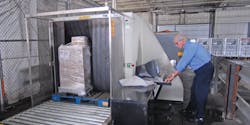
The 9/11 Commission Act of 2007 mandated that the U.S. Department of Homeland Security establish a system to screen 100 percent of cargo flown on passenger airliners by August 2010. According to a Government Accountability Office report released in June, the industry and the Transportation Security Administration won’t meet the deadline. Among GAO’s recommendations is one calling for the agency to develop a
contingency plan. AIRPORT BUSINESS recently interviewed Peter Kant, vice president of government affairs for Rapiscan Systems, one of the
providers of TSA-approved cargo screening equipment, on the 100 percent screening mandate, the process to date, and recommendations as the industry moves forward.
Torrance, CA-based Rapiscan is a provider of screening technologies for various industries, including aviation, and has worked closely with industry and TSA since Congress mandated the deadline. It also offers actual operation of the systems as well. Following are edited excerpts of the Kant interview ...
AIRPORT BUSINESS: From a broadbrush perspective, where are we at in meeting the deadline?
Kant: I think from an industry perspective it’s probably still very far behind for the August deadline. We’ve been filling many orders for a number of the TSA-approved inspection systems, but looking at where the market is and having talked to customers, I still think there’s a fair amount of cargo that is at risk of not being inspected by August 1.
When the 50 percent milestone was first in place and then moved to 75 percent back in April, it was done by master air bill; so, 50 percent of master air bills needed to be inspected.
So, say a shipper has two master air bills at their dock waiting to get inspected and go on a plane. One is Pete Kant’s birthday gift to his grandma; that’s one master air bill. Versus Dell Computers drops off a couple of pallets full of laptops to ship out. Both equal one master air bill; you can inspect the birthday present and be 50 percent done.
When the requirement moves to 100 percent, now you also have to do all of those laptops. That challenge is very big, and I think there are a number of shippers, freight forwarders, and airlines who are going to be cramming up to last minute to try and figure out how to deal with it.
It has been our largest growing single market in the past year — outfitting and supplying air cargo inspection systems for the TSA mandate. It’s been busy.
AB: As I understand the process, the government preferred approach is to target packages at the source, so that they are secure when they arrive at the airport. Is that correct?
Kant: That was the original concept; the problem has been chain of custody and consolidation. The economies of scanning are in scanning bigger boxes, not more little ones. So doing it at the point of packing means lots of machines distributed in lots of places, and then trying to figure out the insurance and the chain of custody. Because the airline is the regulated party, it’s very difficult for the airline to push the risk that far down the supply chain. There are places where that’s happened, where people have worked out the supply chain logistics. Typically, your very, very large shippers that are moving a fair amount of air cargo. But for the most part, a lot of stuff is arriving at the airport piecemeal and then being consolidated for flights.
There still needs to be inspection at the airport, because you’re always going to have folks sending stuff that you won’t see until it gets to the airport. So you have to build the infrastructure airside anyway. It made more sense to get the most investment out of that capital expense — the more volume you can get through an airside system the more value out of the investment.
AB: Regarding airports, have you found that they are falling into certain categories regarding the type of equipment they want to install, or is it across the board?
Kant: The most commonly used technology is x-ray based. The sales that we have been seeing the most of have been the larger tunnel size x-ray machines. So, it’s multiple view x-ray systems meant for inspecting pallet-size and skidded cargo.
AB: What’s been your experience in terms of the way airports and airlines have worked together on this issue?
Kant: It depends on the airport. At an airport like Houston Intercontinental, which is dominated by Continental, their lives are very much intertwined on how to respond to this. So, the Houston Airport System and Continental would typically work very closely together because, say, 90 percent of the cargo through that airport will be on Continental.
You take an airport like LAX or JFK or Miami, heavy cargo airports but not single carrier dominated, they need to make sure they can still have a strong growing cargo business at that airport for all the airlines. So, the airport may decide to do something centrally as opposed to relying on a single carrier. Where we see multiple carriers or lots of cargo on many different carriers, you see the lead being taken by the airport.
AB: What do you predict is going to happen come August 1?
Kant: I think there’s going to be a lot of questions, a lot of surprise shipments, a lot of things going by ground — and hopefully a little more clarity on what enforcement will look like. It’s not clear right now what will happen if things aren’t scanned.
AB: Do you foresee TSA grounding flights?
Kant: It’s certainly possible. It could translate into a fairly substantial change in aviation cargo revenue, and since the airlines seem to be just starting to be getting their feet back under them again, taking a hit on something as profitable as air cargo would be substantial.
AB: At this point, do you have any particular recommendations for the industry?
Kant: My recommendation to airports and to airlines is: It is real; it isn’t going away. They really need to talk with their security director and their cargo business managers and the industry. We’re not backordered yet; but the factory is almost full. We’re not the only provider; Smith’s Detection is another; L-3; we’re all very much focused on this.
There’s been a lot of talk about whether or not TSA is going to pay for these machines. There is no indication that’s going to happen in the current government budget environment. There’s no way it’s going to happen. So, for those airports or airlines who continue to wait to see if that’s going to happen, the ship has already sailed.
AB: Along the way, have there been any particular hic-ups or unforeseen hurdles?
Kant: The largest hurdle was that TSA in the initial stages and mid stages was having a difficult time determining how to communicate to the cargo, airline, and airport industry what would be allowable and what wasn’t. For example, there’s an approved list of technologies, but it’s classified. So, we would visit an airport and they’d ask for the TSA list. I would say ‘no’.
That’s one example. The list was called the Draft List of Pre-Approved Technologies. So the question from airlines and airports was, ‘If I buy this, will I know it’s still approved on August 1?’ I couldn’t answer the question. They were trying to make some investment decisions on some pretty costly hardware and then training people on it, and had no assurance come August 1 it would still be allowed.
TSA has since addressed that and has had better communication and did say these things would be allowed and grandfathered. But it caused an 18- to 24-month delay in the procurement cycle for some because they just didn’t have the assurance.
I would say that was an unforeseen bump.
AB: Did that procurement delay force companies like yours to scramble?
Kant: We’re certainly going to have to scramble. There’s just not much on the shelf anymore; we are building quickly. I think it could leave a number of shippers and airports and airlines with not enough capacity.