LAXFUEL Operates on Precision
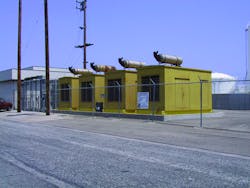
Upon entrance to the LAXFUEL facility through a crash-rated gate, the first impression is — simply put — a little intimidating. Several large storage tanks accent the skyline and line the grounds, interconnected through an intricate system of pipelines. Aircraft Service International Group manages the facility, which it has done since 1986. With substantial development in the past 25 years, the facility is the largest operation of its type in the country, supplying more than four million gallons of Jet A to airlines each day.
History
In 1986, the fuel supply chain at LAX was a markedly different operation. Separate fuel facilities located around the terminals were owned by individual fuel suppliers, leaving airlines little choice for their fuel purchasing options. “It wasn't an open market situation at LAX,” comments Larry McMahon, vice president – fuel consortiums at ASIG. “The airlines basically worked out a deal with the oil companies and the airport to buy out the oil companies’ facilities.”
Once the fuel facilities were placed under the ownership of the airline consortium, the latter looked to an outside contractor to manage it. It selected ASIG, which has been handling the facility ever since, recently marking its 25th year with the facility and receiving a recent contract extension.
And the development accelerated from there, according to McMahon, as the airlines looked to consolidate the scattered facilities into a central operation. During a five-year development period from 1991-1996 at a cost of $125 million — which the airlines paid for with bond financing it secured through the city — the facilities were consolidated into a central fuel farm located at the airport. According to McMahon, this new centralized facility operated and maintained by the airlines through its contractor (ASIG), could now be accessed by a multitude of suppliers. “There were no longer any physical constraints which limited whom the airlines could satisfy their fuel supply demands with. Essentially LAXFUEL grew from having four to five suppliers to 30 suppliers overnight.”
And to allow access from additional suppliers, the consortium leased additional storage space off-airport. “Over the years they went and secured off-site facilities, so ship importers and other refiners in the area could ship into these off-airport facilities. This fuel could then be shipped into the airport for on-airport fuel consumption,” he explains. These facilities consisted of leased pipelines, storage tanks and berths for ship deliveries.
Modern-Day Operation
The facility currently serves approximately 75-80 airlines at the airport. It features 15 large storage tanks and a state-of-the-art filtration system as well as 18 pumps that dispense fuel at a rate of 1200 gallons per minute. It has an on-airport capacity of more than 600,000 barrels of fuel. It is fed by four pipelines from a variety of fuel supply sources. Three off-airport storage locations provide a capacity of 1.5 million barrels. “We have about 20 days of fuel supply capacity with on-airport and off-airport storage,” according to Jim Moses, LAXFUEL’s Facility Manager...
The operator points out that it does not get involved in purchasing of fuel for each airline. This function remains the responsibility of each airline operating at LAX. “The airlines purchase their own fuel and have their own individual contracts with their designated suppliers. Our job is allocating the storage space equitably and making arrangements to bring the fuel in,” McMahon says.
Scheduling and allocation of the fuel takes a concentrated effort on the part of the various airlines, fuel suppliers and ASIG. Don Peninger, ASIG’s scheduler at LAXFUEL, works regularly with airline members and their suppliers to coordinate plans for each shipment of fuel, ensuring that planned inventory shipments are within a manageable range. Mr. Peninger noted that “We allocate the storage to all of the LAXFUEL suppliers and airlines on an equitable basis.”
As with all storage facilities, the fuel supply at LAXFUEL is commingled as the jet fuel needs to meet only one industry wide quality standard.
Fuel Quality
Beyond scheduling and allocation of storage capacity, another primary responsibility of the operator is to ensure fuel quality. ASIG’s responsibility for the quality of the fuel begins from receipt at its facility to the isolation pits located at each terminal.
Safety and Emergency Response
The facility disperses an average of more than four million gallons of fuel a day — an operation that demands a constant focus on safety. A network of surveillance cameras oversee activity at the facility, while an electronic monitoring system (collectively known as the Surveillance Control and Data Acquisition system) runs constant internal checks of storage tanks and pumps, noting such factors as fluid levels, temperature, pressure, and flow rate. If unacceptable limits are detected, automatic shutoffs are engaged as a safety precaution. Another safety feature is emergency fuel shut-off buttons located at the terminal. If an operator engages a fuel shut-down button, it will close fuel valves within seconds.
Audits
As an ISO 9000-2008 certified facility, the organization adheres to strict audit processes for internal and external audits. The internal audits are conducted quarterly. “External audits are also conducted in which airlines will come in and review all of the facility’s quality control, maintenance, inspection and financial records,” says Bruce Grein, ASIG’s Quality Control Supervisor. “
Training
The company employs about 40 individuals in administrative and operations positions at LAXFUEL. On the operations side, it runs 24 hours a day with three shifts that include a shift supervisor and a central control operator and two lab technicians. The facility has established a detailed recurrent training program for all of its employees to ensure that the highest standards are being adhered to on a daily basis.
Future Development
In terms of future expansion, there is a major airport development program going on that will require LAXFUEL to incorporate additional pipelines and the new international hydrant system within its facility distribution system. LAXFUEL is also reviewing the potential for incorporating all of the hydrant systems around the various concourses at LAX into LAXFUEL’s operating system. If this can be accomplished as planned, LAXFUEL would ultimately be operating and maintaining the entire fuel system at LAX. At the present time, these hydrant systems are primarily being maintained by the airlines operating at these concourses in conjunction with their independent contractors.
Lastly, LAXFUEL is working with one of its off-airport terminal operators to expand its off-airport throughput capacity which will enable them to handle additional jet fuel imports. This project is in line with LAXFUEL’s goal to ensure open access for all of LAXFUEL’s airlines and suppliers.