Markey: Screen It All
In November, Rep. Edward J. Markey (D-MA) proposed the Air Cargo Security Act in response to recent international terrorist threats. Notably, the bill calls for 100 percent screening of all air cargo, which follows last August’s requirement for screening of cargo on passenger airliners in the U.S.
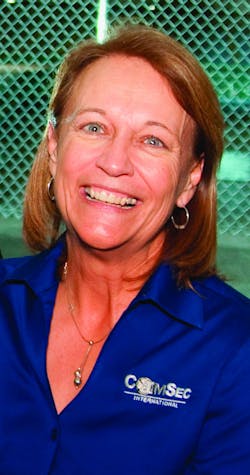
The legislation would cause a chain reaction among shippers, carriers, freight forwarders, and independent cargo screening companies. One independent screener is ComSec International, based near DFW and founded by Judy Davis and Jason Watson, two veterans of compliance services and security, respectively.
Davis recently spoke with airport business regarding the proposed cargo legislation and the state of the industry in general. Here are edited excerpts ...
airport business: In August, TSA enforced the 100 percent cargo screening rule for passenger airliners. What’s your evaluation of where that stands?
Davis: We had the initial mandate after 9/11 that came through. When the mandate hit for passenger [airliner] screening, a lot of it just migrated over to the cargo carriers, and they’re running beyond capacity. If the new legislation goes through, there’s no out on that. Everything is going to have to be screened, and that could pose some real challenges.
ab: There seems to be some disagreement in industry as to whether or not the August deadline is being met. Your thoughts?
Davis: I think it’s being met. I don’t know if it’s being met consistently under the same standards across the board, which would be my concern. There are three different sets of regulations involved. The airlines have a regulation; the indirect air carriers have a regulation; and, as an independent, we have a third regulation.
Anybody that’s just in ground transportation is not regulated at all, except as it interfaces with one of those other three regulations. It’s one of those situations where nobody really knows what the others are doing, in some regards. So, I’m not sure we’re all being held to the same standard of screening. That’s my concern. Yes, I think the airlines are accurately portraying that everything that’s loaded on a passenger aircraft is being screened. There are two things that are not happening. One, they’re not telling you what didn’t get on the plane because it didn’t get screened, so it got pushed back and maybe missed a booking. And the second thing is, they’re not really saying how it got screened — at what level of scrutiny?
ab: A criticism is that TSA is a reactive agency — that is, it reacts to the latest threat. Is that the right approach?
Davis: It is a reaction. We need to get out ahead of it instead of being reactionary. It’s always the bottom line. We have to respond to something that’s happened because the public expects you to respond to it. But the next time they choose to put some kind of explosive in something it’s not going to be a printer cartridge. And it probably isn’t going to come from Yemen. Those two things are now being very highly watched.
ab: One of the responses of federal agencies following 9/11 was the formation of C-TPAT [Customs-Trade Partnership Against Terrorism], a program targeted at supply chain security. It looked like a smart approach to screening cargo, via the supply chain. What do you see as the role of C-TPAT?
Davis: Yes, C-TPAT; and the new one is ‘Ten Plus Two’ that’s on the import side for the U.S. on pre-alert manifestation for anything inbound. It’s kind of a tag-on to C-TPAT. Those are elaborate programs, and if everybody was involved with them it might generally help the situation.
If you qualified to be a C-TPAT participant, and you met all the qualifications and were certified, the standards were very high for that program, and it evolved into an even higher level.
ab: Are ‘one-off’ packages the primary concern when it comes to cargo?
Davis: No, I don’t think so. In several different instances they’ve found things in the middle of a skid that weren’t detected simply because they were in the middle of a skid that didn’t get broken down to be screened. Our message is, if we get this legislation passed it’s going to put everything on a more even playing field to detect what’s out there and make sure not only the passenger safety is addressed but the safety of the cargo planes as well. The collateral damage to that would be significant.
ab: What’s your analysis of Rep. Markey’s proposed legislation?
Davis: It does put everyone on a more level playing field. It won’t allow an in-road of any kind to undermine the safety of the supply chain. The bad point is, the timetable of 12 to 18 months for 50 percent as proposed will be a struggle to implement, just simply because the technology, while it’s available, is not readily approved by the government agencies at this point. I know TSA and Homeland Security are looking actively at a lot of new technology, but it just hasn’t been approved yet. The technology is available; and the ingenuity to develop new technology is out there too.
ab: Do we have any idea where the money is going to come from to fund this latest initiative?
Davis: I didn’t see anything in the proposal. I believe it’s being proposed on the same level as the original security legislation for what’s happening with passenger aircraft. It’s an unfunded mandate. What’s happened is that it has been private money and/or it gets passed on to the consumer because now it has to be security screened.
On the passenger side, most airlines are charging by the kilo for it — you have a screening fee as well as a security fee. Companies like ours that are independent charge a security fee to screen it; it’s our bread and butter. But then it’s accepted at the airlines because it’s pre-screened when presented to them. Somewhere along the line it gets pushed back to the customer.
ab: What is the liability exposure for a company like ComSec?
Davis: It runs fairly high; you have to carry a lot of insurance and you have to qualify for terrorist act insurance. That seems to be the biggest deterrent to people being involved in the program, actually, is the liability. It’s a program that is still in development, much like C-TPAT was for so many years. Training is not at peak level yet.
ab: Did you find that insurance coverage was readily available for this type of high-risk operation?
Davis: It took me months to find coverage, partly because it’s a whole new industry. There’s no insurance industry coding — we don’t fall into any currently coded insurance sector. We had to find an underwriter who was willing or underwrite to support a new industry segment.
If you’re coming in as an independent it’s been a bit of challenge. I’m sure the airlines have their own way of addressing insurance. On the indirect air carriers side, because their core competency is warehousing and transportation, there is coverage on that side because the cargo screening piece to them becomes an additional piece. It’s a value-added service. For the independents or those willing to specialize in just security screening, which is where I think it is going to have to go, that then becomes our bread and butter but it also becomes our focal point. That’s all we do. At some point I think it will come down to the shippers and industrial development manufacturers will take responsibility for how it’s packaged and what goes into it and how it’s screened. If they can interrupt the supply chain, it’s such an important part of our commerce. We are so much a nation of just-in-time supply.